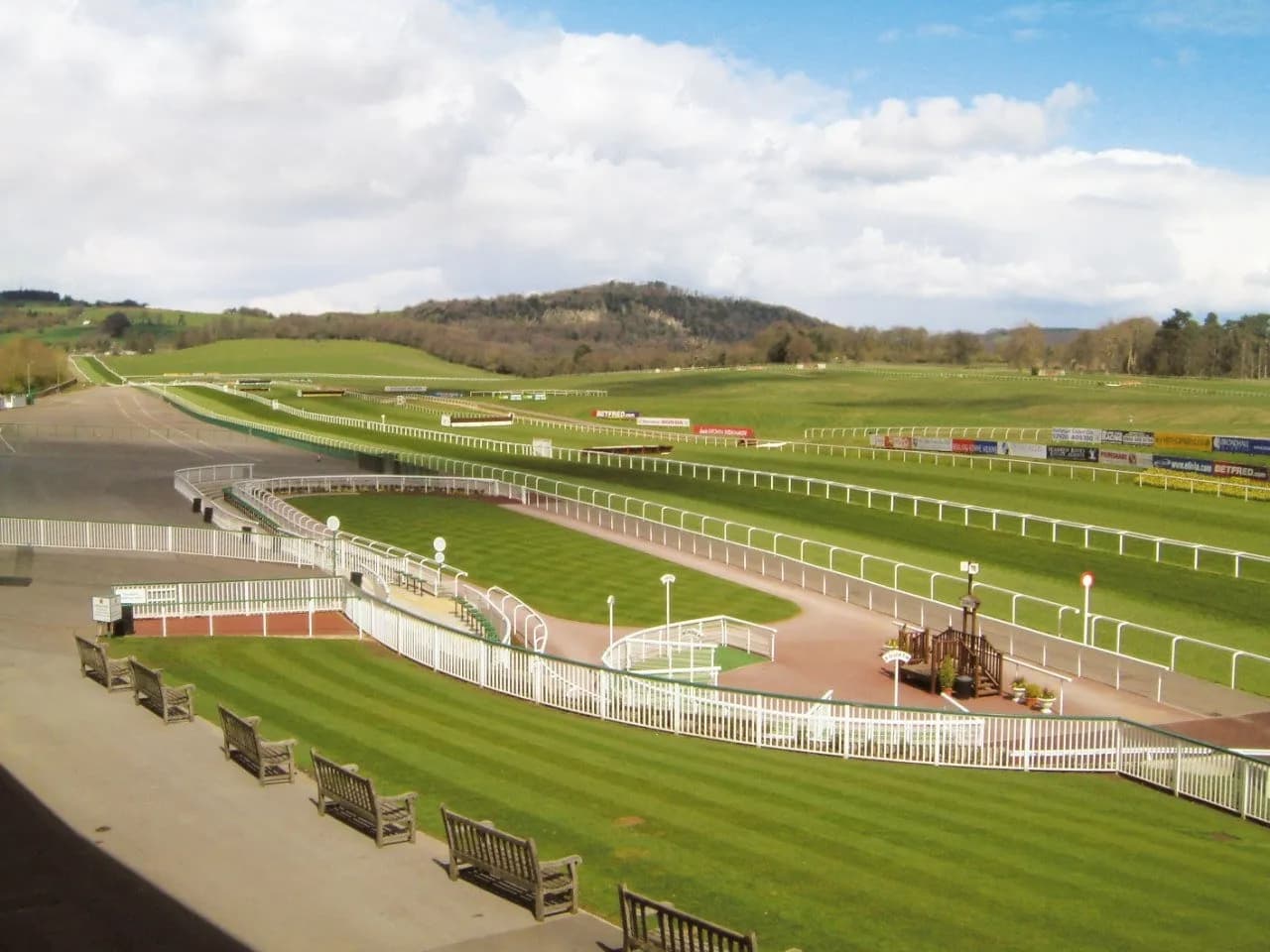
Chepstow Racecourse opened on 6 August 1926 on the Piercefield House estate just north of Chepstow town. What began as a speculative venture by ten South Wales businessmen nearly collapsed within months, yet the course survived to become one of the most significant sporting venues in Wales.
A Precarious Beginning
The racecourse was founded by a consortium of South Wales gentry and businessmen, including Courtenay Morgan, 1st Viscount Tredegar, who served as Lord-Lieutenant of Monmouthshire. The company purchased Piercefield House and laid out the course within its grounds. The inaugural meeting on 6 August 1926 saw Lord Harewood's colt Conca D'Oro win the first race, a two-year-old seller.
The venture faced immediate financial peril. The course nearly closed shortly after opening, surviving only through a substantial bank loan guaranteed personally by the directors. Jump racing commenced in March 1927, establishing the dual-purpose nature that defines the venue today.
War and Reinvention
During the Second World War, the entire site became RAF Chepstow. The No. 32 Maintenance Unit and No. 19 Maintenance Unit operated from the grounds, with a grass runway laid across the centre of the course. Aircraft stationed there included Boulton Paul Defiants, Hawker Hurricanes, Armstrong Whitworth Whitleys, Vickers Wellingtons, and Bristol Blenheims.
The racecourse resumed civilian operations after the war, but its destiny changed fundamentally in 1949. When Cardiff and Newport racecourses closed, the Welsh Grand National transferred to Chepstow. Champion jockey Dick Francis, later famous as a thriller writer, rode the first Chepstow winner of the race aboard Fighting Line.
The Welsh National Legacy
The Coral Welsh Grand National, held annually on 27 December, now carries £170,000 in prize money and represents the second-longest continuous race sponsorship in British jump racing, with Coral's backing dating to 1973. The race was moved to the day after Boxing Day in 1979 after a snow abandonment forced a schedule change.
The course has proven a testing ground for champions. Burrough Hill Lad won the 1983 Welsh National before taking the Cheltenham Gold Cup less than three months later. Synchronised, victorious in 2010, claimed the 2012 Gold Cup. Native River, the 2016 Welsh National winner, triumphed at Cheltenham in 2018.
Other notable Welsh National victors include Bonanza Boy, who won consecutive runnings in 1988 and 1989 for trainer Martin Pipe; Carvill's Hill, described as "one of the easiest winners in the history of the race" in 1991; and Dream Alliance, whose 2009 victory inspired the film "Dream Horse".
Champions on the Course
Jockey David Nicholson achieved a remarkable feat between 1959 and 1961, riding three successive Welsh National winners: Limonali, Clover Bud, and Limonali again. Nicholson later became a successful trainer. Gordon Richards, champion jockey of his era, won eleven consecutive races at Chepstow across two days in 1933, only failing to complete the sweep in the final race.
More recently, 16-year-old James Bowen became the youngest jockey to win the race in 2017. Potters Corner, trained by Christian Williams, became the first Welsh-trained winner since 1973 when he triumphed in 2019.
The Track Itself
Chepstow operates a left-handed undulating course with an oval circuit measuring just under two miles. The five-furlong finishing straight is one of the longest in British racing. The chase course features eleven fences on a complete circuit, with the Welsh National covering 3 miles 6½ furlongs and 23 fences following a distance extension in 2019.
The venue hosts 29 fixtures annually, combining flat racing through the summer months with jump racing in winter. The completion of the Severn Bridge and M4 motorway has made the course accessible to English racegoers, drawing crowds from both sides of the border.
Ownership and the Centenary
Sir Stanley Clarke built an 80 per cent stake in the racecourse during the late 1990s, becoming executive chairman in 2000 before resigning in 2003. The venue is now owned by Arena Racing Company, formed in 2012 through the merger of Arena Leisure and Northern Racing.
The racecourse will mark its centenary on 9 August 2026 with a dedicated Centenary Raceday. Beyond racing, the venue has diversified into concerts, weddings, corporate events, and conferences, with past musical acts including Madness, Tom Jones, UB40, and Simply Red.
Local Connections
The Clay family, who purchased Piercefield House in 1861, have maintained involvement with the racecourse since its formation. The venue maintains partnerships with local businesses and charities, including support for Jamie's Farm through summer racing events. Local sponsors include Chepstow Plant International, David James, and Trade Centre Wales.
The racecourse remains embedded in Monmouthshire life, drawing visitors to Chepstow throughout the year and providing a stage where champions have been tested and crowned for nearly a century.