The arrival of more than 6,000 skilled workers from Britain's great shipbuilding centres fundamentally reshaped Chepstow during the final years of the First World War. What began as an emergency wartime measure left a permanent mark on the town's landscape, population, and identity.
The Emergency That Brought Them
In 1916, as German U-boats threatened to sever Britain's maritime supply lines, the Standard Shipbuilding Company was formed by Lord Inchcape and Chepstow marine engineer John Henry Silley. Their objective was ambitious: to mass-produce "standard" cargo ships using prefabricated parts that could be assembled rapidly at a new National Shipyard on the River Wye.
The Government took control of the operation in August 1917, establishing National Shipyard No.1 immediately south of Chepstow railway bridge. Eight slipways were laid down for vessels up to 600 feet in length. The plan required labour on an unprecedented scale for this quiet Monmouthshire market town.
Workers From the North
Over 6,000 skilled workers descended upon Chepstow from the great shipbuilding districts of Tyneside and Clydeside, alongside recruits from other industrial centres. This influx more than doubled the town's population practically overnight.
The workforce came with their families, their skills, and their expectations. Housing them became as urgent a priority as building the ships themselves.
The Garden Suburbs
The response was one of the most ambitious housing programmes Wales had seen. Three "garden suburbs" were constructed between 1917 and 1919:
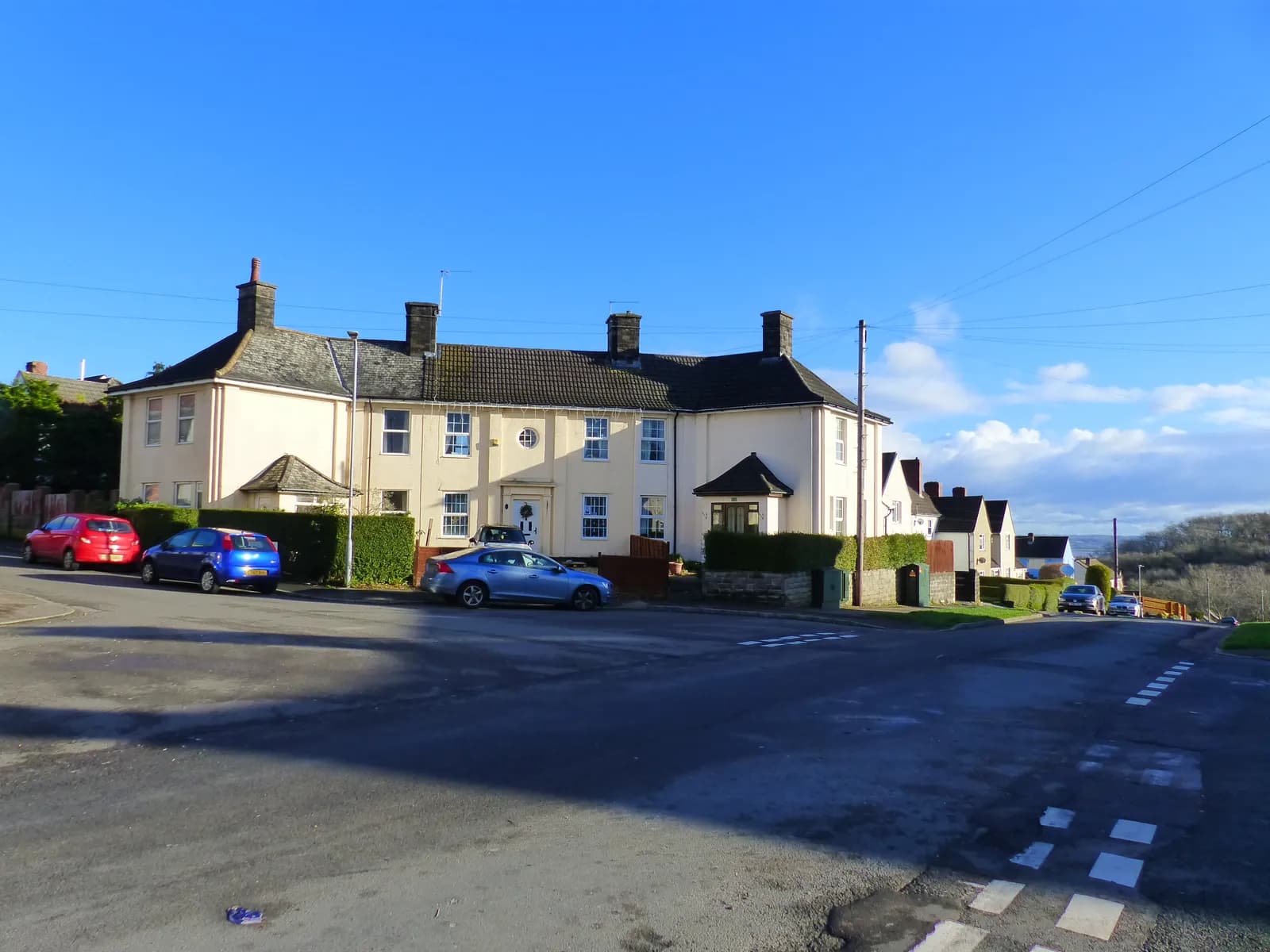
- 200 houses at Hardwick, now known locally as "Garden City"
- 223 houses at Bulwark, centred on the distinctive Octagon where Bulwark Avenue meets Victoria Road
- 342 houses at Pennsylvania in Sedbury, serving those working at the sister National Shipyard No.2 at Beachley across the river
The housing was designed by Henry Farmer of the Admiralty, with architectural guidance from Henry Avray Tipping of Mounton. The Bulwark development, with its geometric street plan radiating from The Octagon, remains a distinctive feature of the town today. Some Hardwick properties still retain their original windows and unrendered finish, offering glimpses of their wartime origins.
Additional temporary accommodation was provided in concrete huts, whilst Mount Pleasant Hospital—now Chepstow Community Hospital—was built to serve the expanded population. The total cost for housing and hospital infrastructure reached £863,000.
Ships and Legacy
The first vessel, War Forest, was launched from Finch's site in September 1918. Though the war ended before the yard could fulfil its strategic purpose, production continued into the 1920s. In 1920 alone, eight ships totalling 40,510 tons were launched, including the 6,543-ton War Glory in April of that year.
The total investment in Chepstow and Beachley shipyards reached £6,120,000—a staggering sum for the era.
In 1924, the Fairfield Shipbuilding and Engineering Company acquired the site, shifting production from ships to bridges and heavy engineering structures. The Mabey Group took over in 1966, continuing Chepstow's engineering tradition until their move to a new site adjoining the M48 motorway in 2015.
Chepstow Today
The garden suburbs built for those wartime workers now accommodate over half of Chepstow's resident population. Bulwark and Thornwell together form the most populous part of the town. The Octagon remains a local landmark, and the street names of Camp Road and the garden city layout still trace the footprint of that extraordinary migration.
The former shipyard site is now being redeveloped as the Brunel Quarter, with more than 350 homes approved. In October 2022, the No.4 slipway opened as public open space—a modest memorial to the industrial enterprise that once stood there.
What remains most vivid, however, is the human legacy. The descendants of those Tyneside and Clydeside families still live in Chepstow, their presence a permanent reminder of how a wartime emergency transformed a Welsh border town forever.